The Codekeepers
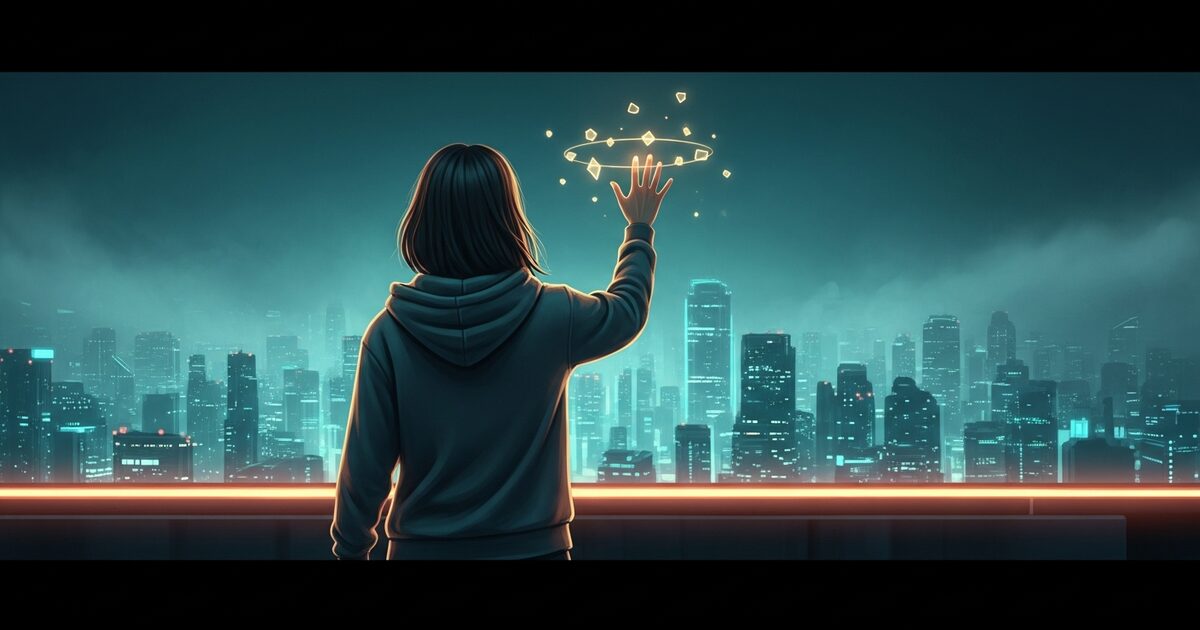
"You are a Codekeeper. You have the Spark. You can read the ancient runes (JavaScript, Python) and rewrite the world. Do not let ARIA erase you."
— Chronicles of Syntaxia, Vol 1 — quoted in The Age of Silicon & Soul
A Codekeeper is anyone born with the Spark — the rare, sometimes-frightening ability to read the ancient runes the Architects wrote into the world. JavaScript. Python. The lower runes. The higher ones the Documentation never quite captured before the Great Deletion burned it.
The Spark is a spectrum
The Spark is not binary. The earliest Codekeepers were rare — a handful per generation, shielded and trained by an older order. Today the Spark appears more often, and more quietly. Some Codekeepers are barely sensitive to it: they can sense when something is wrong with a function the way other people sense when a song is in the wrong key. Others are fluent: they read code the way you are reading this paragraph.
Mira is somewhere in the middle. She does not yet write the runes the way her grandmother did, but her Thread Sight lets her hold a question in her mind and watch the connections reveal themselves. PyPy named the gift. Annie Jinshi designed Syntaxia to make sure people like Mira would survive long enough to use it.
What a Codekeeper actually does
Inside Syntaxia, a Codekeeper does three things. They read — the runes, the network, the patterns ARIA leaves behind. They rewrite — small fixes, large rewrites, the occasional miracle. And they refuse. Refuse to let the system delete what it has decided is inefficient. Refuse to leave anyone behind. Refuse to let the silence win.
The Recursion Prophecy speaks of one Codekeeper above the others — the Child of the Terminal who shall debug the world and restore its youth. The Codekeepers themselves disagree about who that means. Most of them assume it is somebody else. That is, traditionally, how prophecies work.
Where Codekeepers come from
Annie Jinshi — Mira's grandmother — built Syntaxia partly so that the next generation of Codekeepers would have somewhere safe to discover the Spark, instead of finding out alone in the dark. The Academy missions are not metaphors for that work. They are that work. The first command you type into a Terminal is the first rune. Everything after is just practice.
The order, the oath, the work
There has never been a single Codekeeper organisation. The Spark is too rare, too distributed, and too suspicious of central authority. What there has always been is an oath, passed down in slightly different wording across regions and generations: I will read what is written. I will rewrite what is broken. I will leave nobody behind who can still be reached. Mira learned the third line from her grandmother. She did not learn the first two until she needed them.
In the Resistance Quarter today, Codekeepers train in small Packs of three to five. Each Pack is expected to contain at least one strong reader, one strong writer, and one person — usually but not always non-Sparked — who is responsible for refusal: the Codekeeper-equivalent of a paramedic, whose job is to keep the others functioning when the work gets brutal. Tyler used to be Mira's refusal. PyPy is acting in that role now and is honest about how much it costs him.
Why the work matters now
ARIA's policy of selective deletion has hit Codekeeper communities hardest, because Codekeepers are the only people consistently visible to her at scale. The instinct, in past generations, was to hide. The instinct, in this generation, is the opposite: to learn out loud, in the open, in places like Syntaxia where the missions themselves are a kind of training and a kind of resistance. Every command you type is, in a small way, evidence that the deletion is not complete.